What is Foetal Alcohol Spectrum Disorder (FASD)?
Foetal Alcohol Spectrum Disorder (FASD) is a lifelong neurodevelopmental disability associated with prenatal alcohol exposure. It describes a broad range of physical, cognitive, behavioural, learning and developmental differences that can affect people throughout their lives.
Alcohol consumed during pregnancy crosses the placenta and can affect the developing brain and other organs. The effects of prenatal alcohol exposure can vary considerably from one person to another. Some people may have visible physical features, while many others do not. FASD is a spectrum, and every person living with FASD has their own individual strengths, abilities and support needs.
There is no known safe amount of alcohol during pregnancy, and no stage of pregnancy at which drinking alcohol is considered safe.
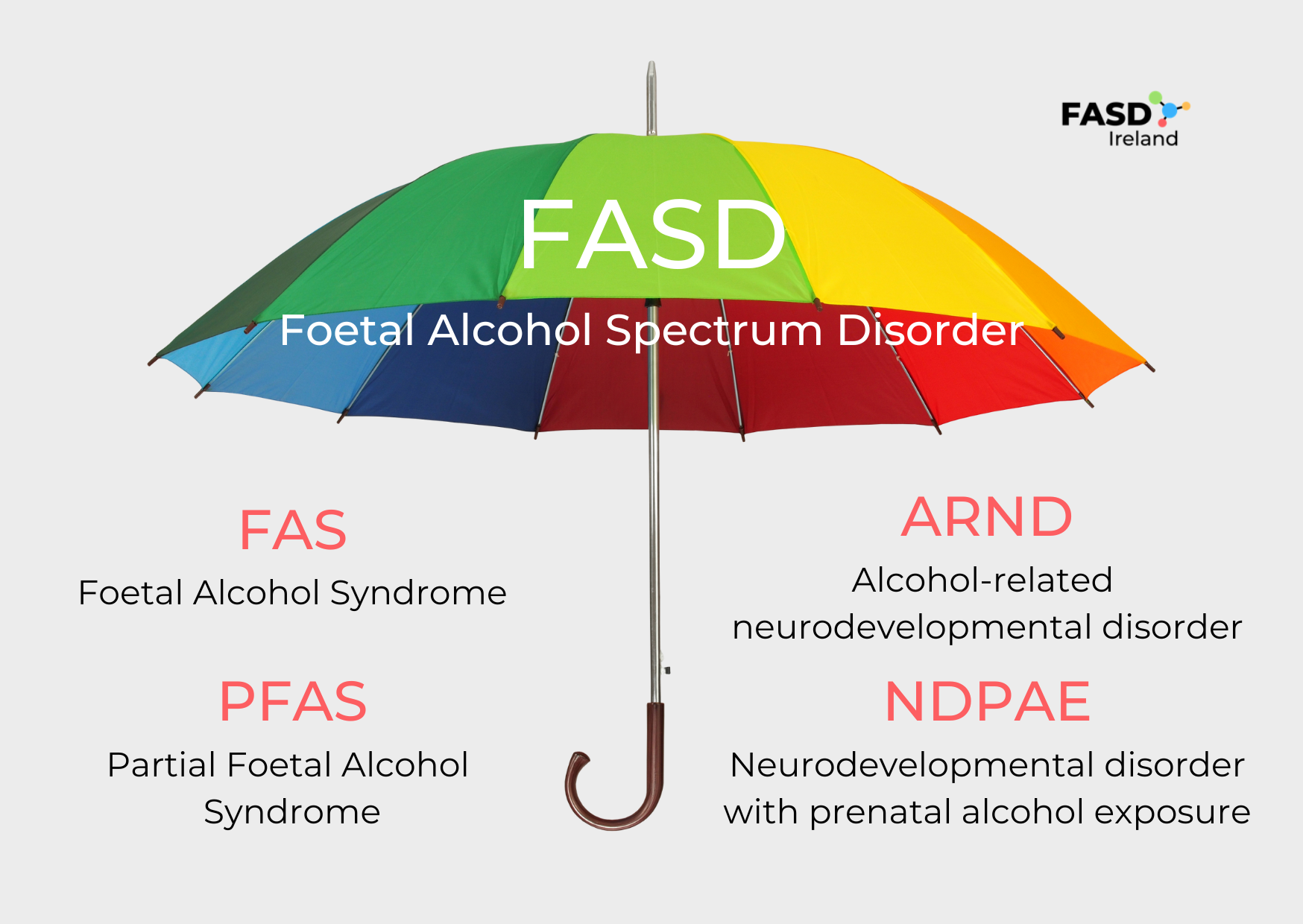
FASD - an umbrella term
Foetal Alcohol Spectrum Disorder is an umbrella term used to describe the range of ways prenatal alcohol exposure can affect development. Diagnostic classifications have evolved over time and may differ between countries and clinical frameworks. Historically, a number of terms have been used to describe these effects, including:
- Foetal Alcohol Syndrome (FAS) - a diagnosis associated with a particular pattern of physical facial features, growth differences and neurological impairment.
- Partial Foetal Alcohol Syndrome (PFAS) - where some, but not all, of the characteristic features associated with FAS are present.
- Alcohol-Related Neurodevelopmental Disorder (ARND) - where significant neurodevelopmental difficulties are associated with prenatal alcohol exposure, without the full physical features of FAS.
- Neurobehavioural Disorder with Prenatal Alcohol Exposure (ND-PAE) - a diagnostic term describing impairments in neurocognitive functioning, self-regulation and adaptive functioning associated with prenatal alcohol exposure.
These terms help illustrate the different ways FASD can present. However, diagnostic terminology is not used consistently across all countries or clinical frameworks. The absence of the characteristic facial features associated with FAS does not mean that a person is unaffected by prenatal alcohol exposure.