Ireland Must Confront the Hidden Lifelong Impact of Foetal Alcohol Spectrum Disorder (FASD), Experts Warn at National Conference
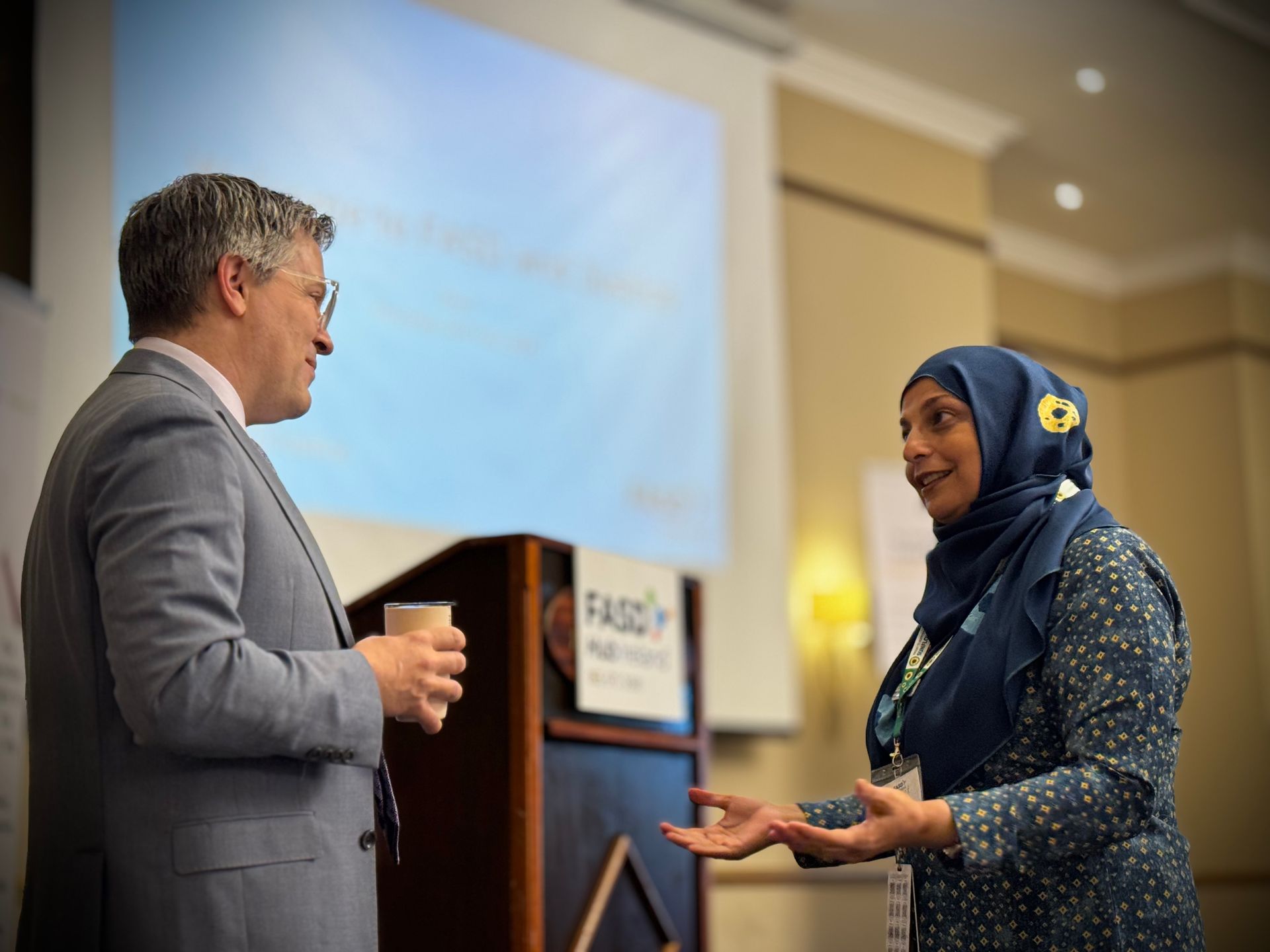
FASD Ireland has called for urgent national action to address the growing impact of Foetal Alcohol Spectrum Disorder (FASD) in Ireland following its 2nd Annual National Conference, held at Hotel Woodstock, Ennis, Clare, on 14 & 15 May 2026, which brought together leading clinicians, researchers, legal experts, educators, social care professionals, and people with living experience from Ireland and internationally.
The conference heard stark warnings that Ireland’s entrenched relationship with alcohol, combined with low public awareness of the risks of prenatal alcohol exposure, continues to drive preventable brain injury in unborn children.
FASD is caused by prenatal alcohol exposure and is a lifelong neurodevelopmental disability that can affect memory, learning, impulse control, emotional regulation, communication, adaptive functioning, physical health, and social understanding. While outcomes vary significantly, FASD can affect every aspect of a person’s life from infancy through to adulthood.
International prevalence studies suggest that FASD affects an estimated 8 in every 1,000 of population globally, with prevalence in Ireland estimated to be significantly higher, at up to 7.4% of population (HSE Position Paper on FASD Prevention September 2022). Conference speakers warned that Ireland’s historic and cultural normalisation of alcohol consumption means Ireland is now facing a silent epidemic.
Speaking at the conference, Dr. Julian K Davies, Clinical Professor of Paediatrics at the University of Washington, Seattle, and one of the world’s leading FASD clinicians, highlighted the scale of prenatal alcohol exposure in Ireland and the profound developmental consequences that can follow.
Dr Davies told delegates: “FASD is a complex developmental brain injury. The brain is trying to do the best it can with the hardware and software it has.”
He explained that FASD is frequently misunderstood because many individuals do not present with obvious physical characteristics. “One in ten of the people we see in clinic have the face of Foetal Alcohol Syndrome (FAS). Ninety percent don’t.”
Dr Davies emphasised that FASD is not simply a childhood condition, but a lifelong disability requiring ongoing support and understanding across healthcare, education, housing, employment, social services, and the justice system.
“The gaps between folks with FASD and their peers can widen, particularly at these turning points. The hope is that we can close those gaps with time and intervention.”
Addressing Ireland’s drinking culture and the need for prevention, Dr Davies noted that no amount of alcohol during pregnancy can be considered safe, and emerging evidence also points to risks associated with paternal alcohol consumption prior to conception.
“No amount of drinking during pregnancy is safe.”
“Out of an abundance of caution, it’s great to ask dads to not drink in the 90 days before conception.”
The conference heard that FASD remains significantly underdiagnosed and misunderstood in Ireland despite increasing evidence of its prevalence within mental health services, addiction services, homelessness, disability services, care-experienced populations, and the criminal justice system.
Delegates also heard how many behaviours associated with FASD are often wrongly interpreted as deliberate misconduct rather than manifestations of neurological disability.
Dr Davies stated: “If you’ve told a child a thousand times and the child has still not learned, then it’s not the child who is the slow learner.”
Throughout the two-day conference, speakers stressed the importance of moving away from shame and stigma towards informed prevention, early intervention, compassionate supports, and FASD-informed public services.
FASD Ireland said the conference demonstrated both the urgent need for national action and the growing momentum for change.
Tristan Casson-Rennie, CEO at FASD Ireland said: “FASD is not rare - it is rarely diagnosed. Ireland urgently needs a coordinated national response that includes public awareness, professional training, diagnostic pathways, family supports, and lifelong disability-informed services. The evidence presented at this conference makes clear that FASD affects individuals across every stage of life and every part of society. It is now time that the HSE stepped up to deliver a National Clinical Lead, a National Clinic, and a framework of support that people living with the condition and their families can depend upon.”
FASD Ireland also called for stronger public health messaging around alcohol and pregnancy, including greater awareness that many pregnancies are unplanned and that alcohol exposure can occur before pregnancy recognition. It is also important that FASD is recognised as a conception issue, with responsibility to prevent the condition shared between both parents. To date, the woman is always the focus of the public health messaging the HSE produces. Even the latest campaign, launched last month depicts a heavily pregnant woman being scrutinised or implicitly chastised by those around her. This is particularly problematic. Such portrayals can discourage open engagement with healthcare services and undermine trust, which is counterproductive to effective prevention efforts.
The conference additionally explored the intersection between FASD and the law, including the heightened vulnerability of people with FASD within the criminal justice system due to difficulties with impulse control, adaptive functioning, suggestibility, confabulation, and social vulnerability.
Dr Davies concluded his keynote by urging professionals and families to focus not only on deficits, but also on strengths and belonging.
“If they are connected, supported, know that they are loved, know that they belong, and have areas of strength that they see and acknowledge - that is a win.”
ENDS
Media Contact:
FASD Ireland
Email: scott@fasdireland.ie
Website: FASD Ireland
Telephone: 065 670 3096